OpenAI's newest security announcement is not just another AI model launch. On June 22, 2026, OpenAI introduced Patch the Planet, a Daybreak initiative built with Trail of Bits to help open-source maintainers find, validate, and fix vulnerabilities.
That framing matters. For the last few years, AI security news has often centered on vulnerability discovery: scanners, red-team models, bug-finding agents, and benchmarks that show how quickly models can identify weaknesses. Patch the Planet shifts attention toward the harder operational problem: can the ecosystem turn findings into reviewed, tested, merged fixes before maintainers are buried under noise?
For Diveno Labs readers, this is a practical story. Most modern apps, websites, AI products, Android tools, and cloud backends depend on open-source packages. A vulnerability in one upstream project can spread across thousands of downstream products. If AI makes bug discovery faster but does not make remediation faster, the internet ends up with a larger queue of unresolved risks. Patch the Planet is important because it is explicitly about patching, not only reporting.
The short version
OpenAI says Patch the Planet pairs AI-assisted security research using its cyber-capable models with expert human review. The initiative is part of Daybreak, OpenAI's broader cybersecurity effort, and is being built with Trail of Bits. Trail of Bits says its engineers are working with maintainers and frontier models such as GPT-5.5-Cyber to triage findings and produce patches.
The early numbers from Trail of Bits are concrete: in the first week, Patch the Planet covered 19 projects across areas including cryptography, networking, language infrastructure, and the software supply chain. Trail of Bits reported hundreds of discovered bugs, 64 pull requests, 51 issues filed, and 37 already-merged patches at the time of its post. It also said more than 30 projects had joined the initiative.
That does not mean every open-source security problem is suddenly solved. It does mean one of the strongest AI companies and one of the most respected security engineering firms are trying to push AI security work deeper into the maintainer workflow.
The big product takeaway is simple: the useful AI security layer is not "find more issues." It is "find the right issues, validate them, fix them, test them, and leave the codebase healthier."
Why this is bigger than a bug bounty
Traditional vulnerability reporting often has an uncomfortable handoff. A researcher finds a bug, writes a report, and submits it. The maintainer then has to understand the report, reproduce the issue, judge severity, design a fix, avoid regressions, write tests, coordinate disclosure, merge the patch, and communicate the update.
That is real engineering work. It takes context. It also lands on people who may already be maintaining critical infrastructure as volunteers or with limited time.
Patch the Planet is trying to change that handoff. OpenAI describes the initiative as support for the critical open-source software the world relies on, with AI-assisted research and expert review used to identify vulnerabilities and help patch them. Trail of Bits describes the difference more bluntly: the project is not just filing issues and walking away; it is showing up with patches, tests, fuzzing harnesses, CI security scanning, supply-chain tooling, correctness fixes, and other hardening work.
That distinction is useful for any product team adopting AI. AI that produces more alerts can create work. AI that produces reviewed changes, evidence, and tests can remove work.
What OpenAI Daybreak is trying to become
Patch the Planet sits inside OpenAI's Daybreak security program. OpenAI's June 22 Daybreak update describes a broader push toward end-to-end patch automation, including Codex Security, GPT-5.5-Cyber access for trusted defenders, partnerships, and tools meant to move beyond vulnerability discovery.
That matters because security teams do not only need a smart model. They need a workflow:
- Build a codebase-specific threat model.
- Search for realistic attack paths.
- Validate whether a finding is actually exploitable.
- Suggest a patch.
- Run the patch in an isolated environment.
- Produce evidence that a human reviewer can trust.
- Keep a record of what changed and why.
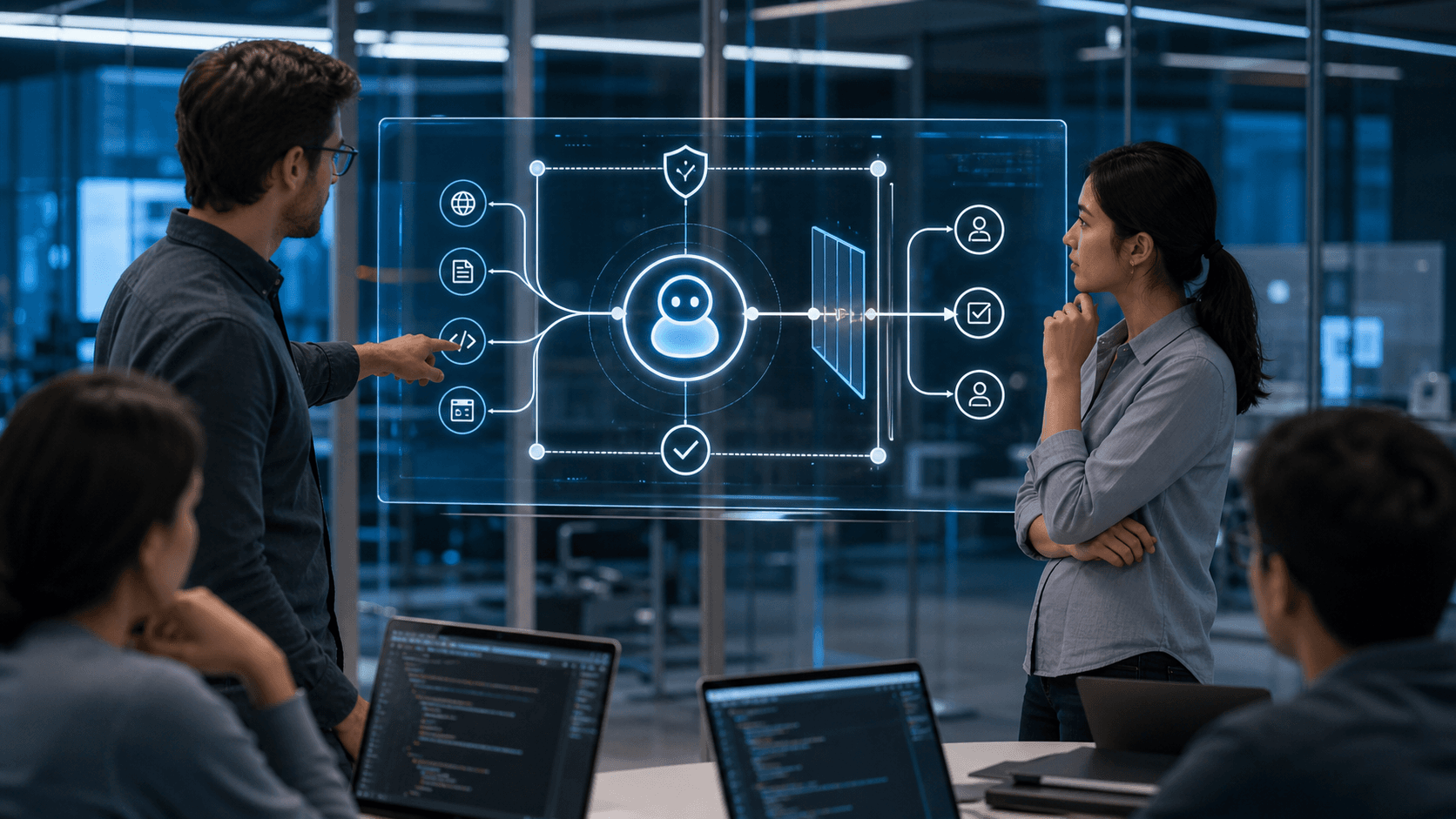
This is where AI security becomes product infrastructure. The product is not a chatbot that says "this looks risky." The product is a pipeline that helps teams reason from source code to validated remediation.
OpenAI's own Daybreak page also positions Codex Security for secure code review, vulnerability discovery and triage, remediation guidance, dependency risk analysis, and patch validation. That is a broad surface. The important point for builders is not that every team should copy OpenAI's stack. The important point is that the industry direction is moving from standalone scanners toward agentic security workflows with human checkpoints.
Why open source is the right place to start
Open source is where software leverage is highest. One upstream library may sit inside mobile apps, backend services, CI pipelines, IoT devices, developer tools, and AI products. A strong fix upstream can quietly protect thousands of downstream users.
That is also why open-source maintenance is stressful. The best libraries become critical infrastructure, but the people maintaining them may not have the budget, staffing, or security operations support of the companies that depend on them. When AI accelerates vulnerability discovery, maintainers can receive more reports than they can realistically process.
Patch the Planet is interesting because it treats maintainers as the center of the workflow. The useful measure is not how many raw findings a model can produce. The useful measure is how many maintainers receive actionable fixes they can review, merge, and trust.
Trail of Bits says its experts orchestrate and triage findings, then handle fixing and hardening code alongside maintainers. That human layer is not a weakness in the model. It is the part that makes the model usable in a real ecosystem.
The remediation bottleneck
Many organizations already know how to find too many security issues. Static analysis, dependency scanners, container scanners, bug bounty submissions, penetration tests, and compliance audits can all produce queues of findings. The problem is usually not awareness. The problem is prioritization and remediation.
Teams need to answer:
- Is this issue real?
- Is it reachable in our product?
- Can it be exploited under realistic conditions?
- What is the smallest safe fix?
- Will the fix break existing behavior?
- Is there a test proving the vulnerability is closed?
- Should we patch locally or wait for upstream?
- How do we communicate the update to users?
AI can help with parts of that work, but only if it is attached to evidence. A model-generated patch without tests is another review burden. A model-generated security report without reproduction steps is another triage task. A model-generated dependency warning without reachability context is another false-positive risk.
That is why the Patch the Planet structure is notable. It combines AI-assisted research, human expert review, maintainer coordination, patches, tests, and hardening. It is closer to a security engineering service than a simple scanner announcement.
What this means for developers
For developers, the lesson is to think about AI security as a development workflow, not a separate audit event.
If you build software, you can apply the same pattern internally:
- Use AI to inspect code paths, dependencies, and risky data flows.
- Require the AI to produce concrete evidence, not just a warning.
- Ask for a patch, but treat it as a pull request that needs review.
- Add regression tests for every meaningful fix.
- Run the change in CI and in a sandboxed environment.
- Keep maintainers or code owners in control of merge decisions.
The developer experience should feel like a better review partner, not like a noisy dashboard. Good AI tooling should reduce the distance between "there may be a problem" and "here is a reviewed patch with tests."
For small teams, that shift is valuable. Startups rarely have a large AppSec department. But they do have code review, CI, dependency updates, and release checks. The best path is often to add AI security assistance inside those existing flows rather than creating a new queue nobody owns.
What this means for founders and product teams
For founders, Patch the Planet is a sign that software security is becoming more continuous and more automated. That does not remove accountability. It raises the baseline.
If you are building a SaaS product, AI app, Android app, internal automation tool, or cloud service, investors and customers will increasingly expect you to answer basic security workflow questions:
- How do you review dependencies?
- How do you respond to critical upstream patches?
- How do you test security fixes before release?
- Who approves AI-suggested code changes?
- How do you track vulnerabilities across services?
- How do you prevent an AI tool from making unsafe changes?
Those are not only enterprise questions anymore. A small product can become important quickly. The more your product handles customer data, payments, identity, health, education, work documents, or business operations, the more these questions matter.
Patch the Planet also hints at a future where open-source maintainers may receive higher-quality assistance from AI-backed security programs. That could improve ecosystem health, but it may also change expectations for response speed. If attackers can use AI to search faster, defenders need better ways to fix faster.
The risk: more AI noise
There is a serious risk in this whole category: models can generate convincing but wrong security findings. They can overstate severity, misunderstand code, propose incomplete fixes, or miss context that maintainers know immediately.
OpenAI's and Trail of Bits' public materials acknowledge this indirectly through the emphasis on expert human review and triage. Trail of Bits specifically notes that frontier models can produce a firehose of findings and that maintainers need help separating real vulnerabilities from plausible-sounding false positives.
That is the right concern. In security, false positives are not harmless. They waste maintainer time. They distract from real risks. They can cause unnecessary churn in sensitive code. They can also create a false sense of progress if a team celebrates issue volume instead of validated fixes.
The quality bar for AI security tooling should be high:
- Findings should include reachable paths and reproduction context when possible.
- Patches should be small, understandable, and tested.
- High-risk changes should require human approval.
- Tools should track false positives and learn from maintainer feedback.
- Security work should improve code health, not merely create reports.
Why this affects downstream apps
Most users never think about the open-source libraries inside an app. They see a to-do list, a payment screen, a dashboard, a streaming app, a school portal, or a shopping experience. Underneath that interface may be dozens or hundreds of open-source packages.
When an upstream vulnerability is fixed, downstream teams still need to update. That is where product discipline matters. An upstream pull request does not automatically protect your product. You still need dependency monitoring, update cadence, compatibility testing, and release discipline.
Patch the Planet can improve the upstream side, but downstream builders should not become passive. The practical response is to tighten your own software supply-chain basics:
- Keep a current inventory of major dependencies.
- Watch for security advisories in core packages.
- Update dependencies regularly instead of waiting for emergencies.
- Prefer maintained libraries with active release practices.
- Run tests that catch behavior changes after updates.
- Review transitive dependency risk for critical paths.
AI can help prioritize this work, but ownership still belongs to the product team.
A useful mental model: AI as a security coworker
The strongest mental model is not "AI as an autonomous security team." It is "AI as a security coworker that drafts work for review."
That coworker can search faster than a human. It can inspect large codebases. It can suggest patches. It can generate tests. It can explain a risky data flow. It can compare dependency versions. But it still needs direction, context, and review.
For maintainers, the question becomes: does this AI-assisted workflow respect my time? For companies, the question becomes: does this workflow reduce risk without hiding important decisions? For users, the question becomes: does this make the software I rely on safer?
Patch the Planet is most compelling when judged by that standard. The published numbers from Trail of Bits are not just findings; they include pull requests and merged patches. That is the metric to watch.
Practical steps for teams this week
You do not need access to every frontier security model to learn from this announcement. A normal product team can act now.
Start with your most important repositories. Identify the packages and services that would hurt most if compromised. Make sure dependency alerts are actually routed to an owner. Check whether your CI can run meaningful tests after security updates. Review whether security patches are tracked through completion or only filed as tickets.
Then add AI carefully:
- Use it to summarize dependency advisories.
- Ask it to identify likely affected code paths.
- Ask for test ideas before asking for patches.
- Require small pull requests with explanations.
- Keep humans responsible for approval.
- Record why a fix was accepted or rejected.
This is less flashy than a fully autonomous agent, but it is how security improvements survive contact with real teams.
How to judge AI security tools after this announcement
Patch the Planet also gives teams a sharper way to evaluate AI security vendors and internal tools. The question should not be "does this tool use AI?" That is no longer interesting. The better question is "what part of the security workflow does this tool actually improve?"
Some tools are best at discovery. They search code, dependencies, configuration, logs, or infrastructure for potential risk. Discovery is useful, but it is only the start. Other tools are better at explanation. They help a developer understand why a pattern is dangerous, where data flows, or how an exploit could work. Explanation is valuable when it improves review quality. A smaller number of tools push into remediation: generating patches, adding tests, updating dependencies, and validating the result.
The highest-value tools connect those stages. A finding should lead to a reasoned explanation. The explanation should lead to a focused patch. The patch should lead to tests. The tests should lead to a reviewable pull request. The pull request should lead to an audit trail that explains why the team accepted the change.
That is the difference between AI as a notification layer and AI as a development accelerator.
Teams should ask practical questions before trusting an AI security workflow:
- Can it show the exact file, function, dependency, or configuration involved?
- Can it explain why the issue matters in this codebase?
- Can it distinguish theoretical risk from reachable risk?
- Can it produce a minimal fix instead of broad refactors?
- Can it add or suggest regression tests?
- Can it run in a sandbox before touching production branches?
- Can it preserve code style and ownership boundaries?
- Can humans approve, reject, or edit the output easily?
If the answer is mostly no, the tool may still be useful as a research assistant. But it should not be treated as a patching system.
What maintainers will need from AI programs
Open-source maintainers are not a generic audience. They know their projects deeply. They also have different needs depending on the project size, risk profile, language, release process, and community norms.
An AI-backed security program has to respect that. It should not flood maintainers with vague alerts, large patches, or changes that ignore the project's architecture. It should produce work in the form maintainers already use: issues with clear reproduction steps, pull requests with narrow scope, test cases, documentation updates when necessary, and a respectful explanation of tradeoffs.
Good maintainer support should also include patience. Some projects cannot merge a patch instantly. A library may support many old platforms. A fix may change behavior that downstream users depend on. A security patch may need coordinated disclosure. A maintainer may need to request a smaller patch, a different approach, or a longer explanation.
That is why human experts remain important. Trail of Bits' role in Patch the Planet is not decorative. Security engineers can translate between model output and maintainer reality. They can discard low-quality findings, improve patches, understand exploitability, and communicate with project owners.
The future of AI security for open source will depend on that relationship. If maintainers feel supported, AI can become leverage. If maintainers feel spammed, AI becomes another burden.
Why tests are the real signal
In security patching, tests are more than engineering hygiene. They are evidence.
A vulnerability report says a problem exists. A patch says the code changed. A test says the team has captured the failure mode and can prevent it from returning. Without tests, a patch may be correct, but reviewers have to carry more of the proof in their heads.
For AI-generated or AI-assisted patches, tests are even more important. Models can produce plausible code. They can also miss edge cases. A regression test gives maintainers something concrete to inspect. It can show the vulnerable behavior before the fix and the expected behavior after the fix. It can also help downstream projects trust the release.
This is where AI can be genuinely useful. A model can help draft tests around boundary conditions, malformed inputs, unsafe defaults, dependency version changes, or known exploit patterns. It can generate fuzzing ideas. It can suggest where existing test coverage is thin. But those tests still need to be run, reviewed, and maintained.
For startups, this lesson applies beyond open source. If your team uses AI to fix bugs, require tests for meaningful behavior changes. That one rule prevents many low-quality AI patches from entering the codebase.
The economics of faster patching
There is also a business reason to care about this. Security debt is expensive. A vulnerability that stays unresolved can slow enterprise sales, trigger emergency engineering work, create customer trust issues, or force an urgent release at the worst possible time.
Open-source dependency issues are especially costly because they often arrive from outside the team. A startup may be focused on features when an upstream advisory suddenly changes priorities. If the fix is straightforward, the team updates quickly. If the fix is complicated, the team may need to patch locally, wait for upstream, or replace a dependency.
Better upstream remediation reduces that friction. If Patch the Planet helps maintainers merge stronger fixes faster, downstream teams benefit even if they never interact with OpenAI's program directly.
For product leaders, this is the strategic point: security work compounds. A better upstream ecosystem means fewer emergency patches. Better tests mean safer updates. Better dependency practices mean lower release risk. AI can help accelerate those improvements, but only when the workflow ends in trustworthy code.
The Diveno Labs take
Patch the Planet is a strong signal that AI security is entering a more useful phase. The market does not need infinite vulnerability reports. It needs faster, safer remediation.
The most important phrase in this story is not "AI-assisted." It is "help patch them." That is the work that protects users.
For developers, the message is to build security workflows that end in reviewed code changes, not dashboards. For founders, the message is to treat open-source dependency health as product infrastructure. For maintainers, the hope is that AI-backed programs can bring more help than noise, especially when expert reviewers stay in the loop.
The next few months will show whether Patch the Planet scales beyond early projects. The benchmark should remain simple: fewer unresolved vulnerabilities, better tests, healthier upstream projects, and less burden on maintainers.
Source notes
- OpenAI: Patch the Planet: a Daybreak initiative to support open source maintainers
- OpenAI: Daybreak: Tools for securing every organization in the world
- Trail of Bits: Introducing Patch the Planet
- WIRED: OpenAI Launches Full-Scale Effort to Patch Open-Source Bugs
- The Hacker News: OpenAI Expands Daybreak With GPT-5.5-Cyber
Frequently asked questions
What is OpenAI Patch the Planet?
Patch the Planet is a Daybreak initiative from OpenAI, built with Trail of Bits, to help open-source maintainers find, validate, and fix vulnerabilities using AI-assisted research plus expert human review.
Why does Patch the Planet matter for startups?
Startups depend heavily on open-source software, so faster upstream fixes, better tests, and better supply-chain security can reduce risk across many products at once.
Does AI replace human security reviewers in this model?
No. The public materials emphasize AI-assisted discovery and patching paired with human expert review, maintainer coordination, and pull requests that maintainers can inspect.
Build with Diveno Labs
Turn this idea into a working system.
Share the workflow, product, or content bottleneck you want to improve. We will help shape it into a practical build.
Build safer software with Diveno Labs