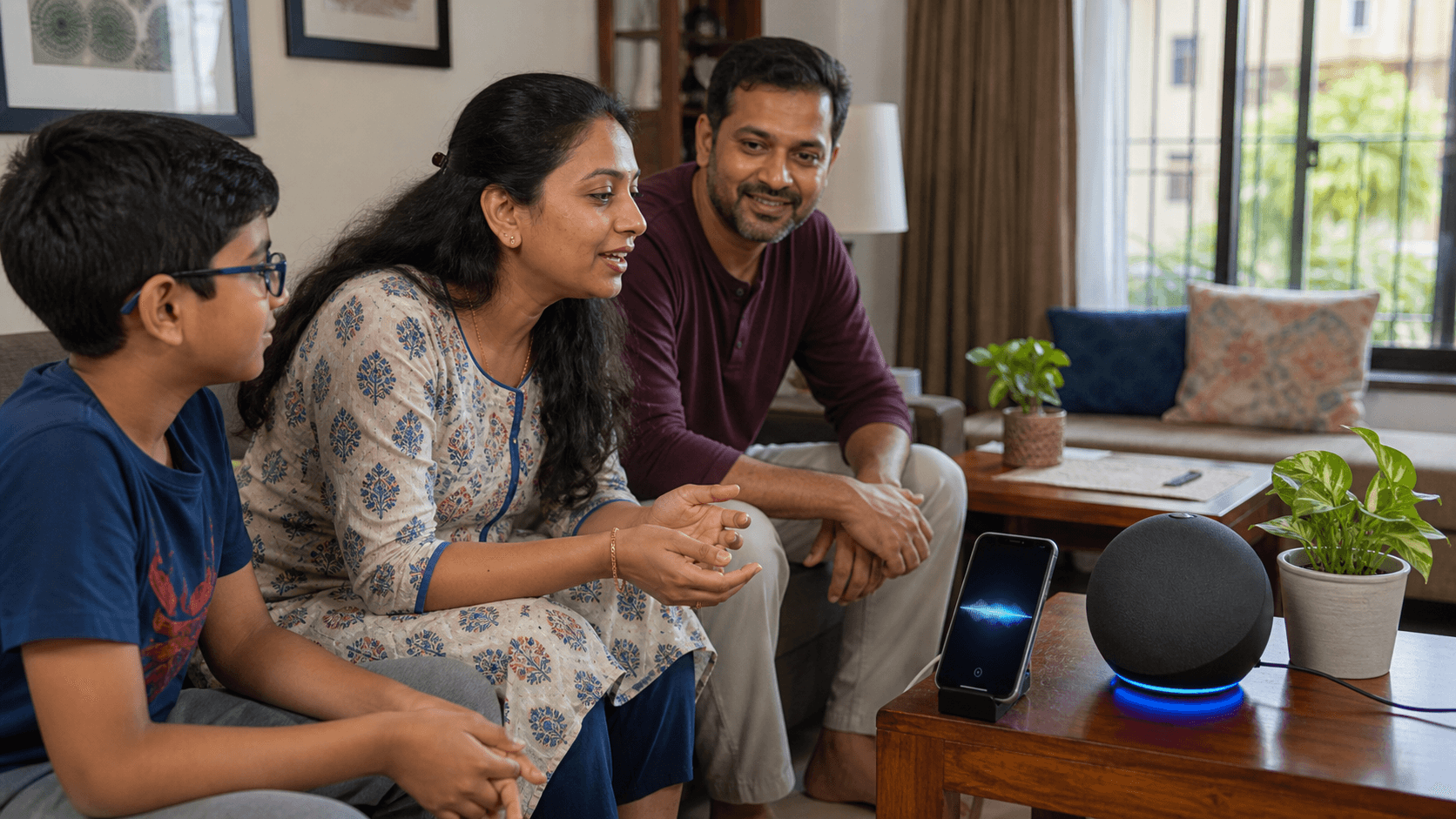
Amazon appears to be preparing one of Alexa+'s most important tests: India, in Hindi.
On June 22, 2026, TechCrunch reported that Amazon is inviting some users in India to beta-test a Hindi-language version of Alexa+. The report says selected customers received emails asking them to fill out a form in Hindi by June 22 to join the beta program. Amazon confirmed to TechCrunch that it is testing Alexa+ in India, but did not provide a broader public launch date.
This is not a small localization update. It is a signal about where consumer AI assistants are going next. The biggest voice assistant opportunity is not only in English-speaking smart homes. It is in multilingual households, mixed-language conversations, regional markets, family routines, local commerce, entertainment, and daily tasks that feel natural in the user's own language.
For Diveno Labs readers, the Alexa+ Hindi beta matters because it combines three major product trends: generative AI assistants, Indian consumer internet scale, and the hard problem of building AI that works in real human language rather than demo language.
The short version
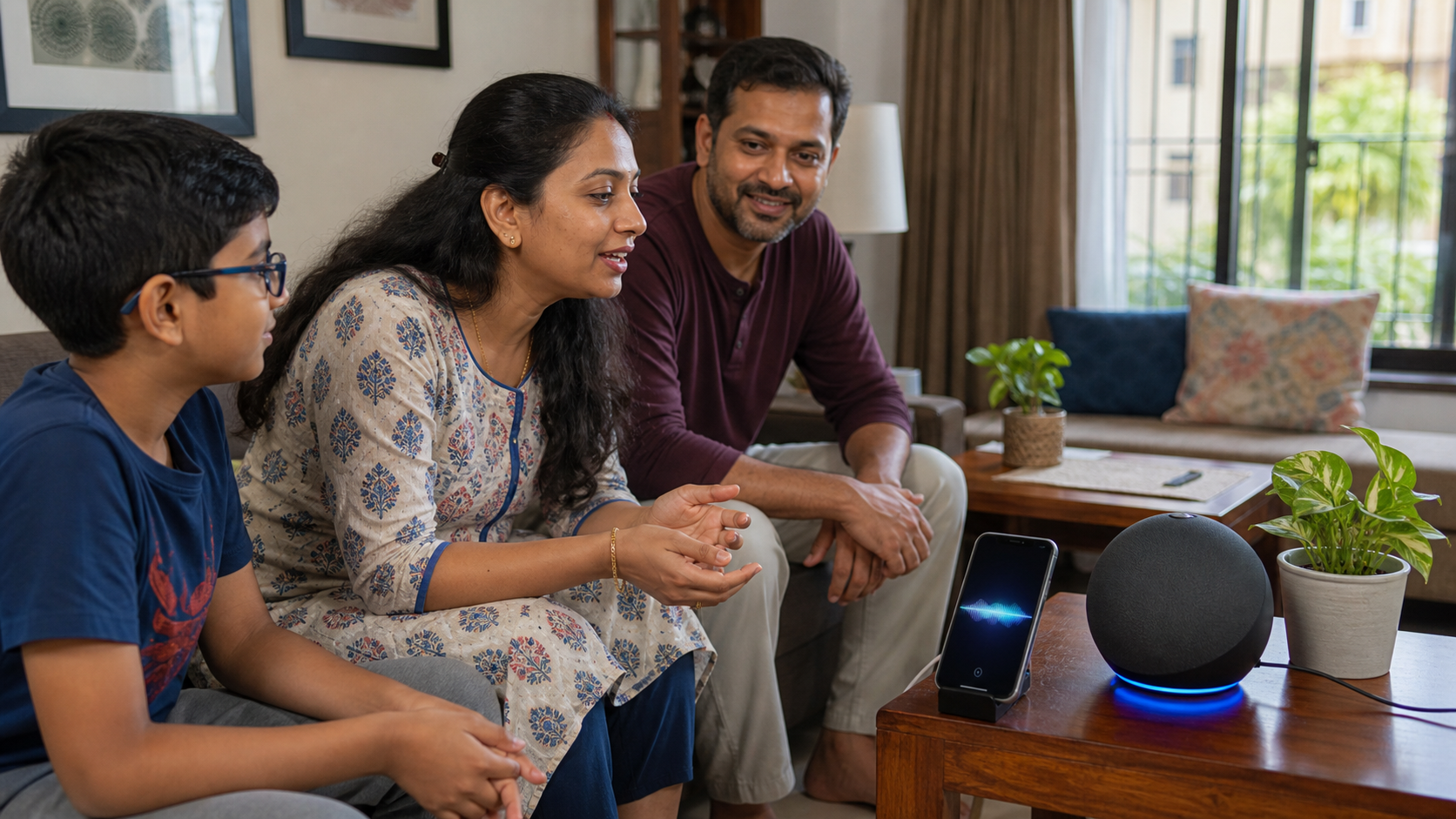
Amazon is testing Alexa+ in India with Hindi support. TechCrunch says the beta invitation warns that the test experience may contain bugs, inaccurate information, and mispronunciations of local nuances. The report also notes that Alexa+ is not currently available in India and that the launch timing is unclear.
The Next Web, citing TechCrunch, described the beta as Amazon's first move to bring Alexa+ to a non-Western-language market. Amazon's own Alexa+ materials describe the assistant as a more conversational, more capable generative AI version of Alexa, built to work across devices and help with planning, family use cases, smart home tasks, and connected experiences.
The practical implication is clear: the next phase of AI assistant competition will be about language, trust, usefulness, and daily context. It will not be won only by model benchmarks.
Why India is a serious test for voice AI
India is one of the most important markets for consumer AI because it is large, mobile-first, multilingual, and comfortable with voice-based interaction in everyday life. Hindi alone reaches a massive audience. TechCrunch notes that more than 600 million people speak Hindi in India.
But Hindi support is not simply a translation exercise. Many Indian users move between Hindi, English, and local expressions in the same conversation. A family might ask one question in Hindi, use an English product name, include a local place name, and expect the assistant to understand the intent. That code-mixed reality is harder than a clean classroom sentence.
That is why beta testing matters. A voice assistant must handle accents, pronunciation, cultural references, family context, regional vocabulary, and imperfect commands. It also needs to know when it is unsure. A wrong answer in text can be annoying. A wrong voice action in the home can feel more intrusive because the assistant is sitting inside a shared space.
What Alexa+ is trying to become
Amazon introduced Alexa+ as the next generation of Alexa, powered by generative AI. In its Alexa+ announcement, Amazon described it as a more conversational and more capable personal AI assistant. Amazon's public Alexa web page says Alexa+ can help with planning, checklists, invitations, continuing conversations across devices, and picking up where a user left off.
That matters because Alexa+ is not just a smarter smart speaker command layer. Amazon is trying to make it feel like a cross-device assistant that can move from voice to phone to web to Echo devices. Earlier TechCrunch coverage also described Alexa+ experiences around shopping, custom AI podcasts, food ordering, and integrations with services such as travel, home services, restaurants, and local business tools in some markets.
The Hindi beta suggests Amazon wants that broader assistant model to work outside its earliest English-centered environments.

Why local language changes the product
When a product adds local-language support, the feature list does not automatically change. But the emotional and practical meaning of the product does.
An English-only AI assistant often feels like a tool for users already comfortable with typing or speaking to technology in English. A Hindi-capable assistant can become a family technology. It can be used by parents, grandparents, children, shop owners, students, and people who do not want to switch into formal English for simple daily tasks.
That expands the potential use cases:
- setting reminders in natural household language
- asking for recipes, news, or devotional content
- controlling lights, appliances, or entertainment
- helping with homework explanations
- planning errands or shopping lists
- translating or summarizing simple information
- supporting small business routines
- answering quick practical questions by voice
The value is not only convenience. It is lower friction. The best consumer AI products feel available at the exact moment the user thinks of the task.
The beta warning is important
TechCrunch reported that the beta invitation said the software would have bugs and might give inaccurate information or mispronounce local nuances. That warning should not be dismissed as routine legal language. It points to the hard parts of local-language AI.
A Hindi voice assistant has to understand not only words, but speech patterns. It must handle names, places, mixed English terms, family relationships, and informal phrasing. It must choose the right level of politeness. It must avoid overconfident answers. It must speak clearly enough that users trust it.
Mispronunciation can be more than a technical flaw. In a voice product, pronunciation is part of trust. If an assistant repeatedly mishandles local names or phrases, users may feel the product was not built for them.
That is why India is not just a market expansion. It is a product-quality test.
What this means for Indian consumers
For consumers, the Alexa+ Hindi beta suggests that generative AI assistants are moving closer to the language people actually use at home. If Amazon gets the experience right, the assistant could feel more accessible to households that do not want AI to remain a laptop or English-chatbot experience.
But consumers should keep expectations realistic. A beta is not a finished product. TechCrunch says Alexa+ is not yet available in India, and Amazon has not confirmed when it will launch. The beta is also likely to be limited, and early testers may see mistakes, rough pronunciation, or gaps in what the assistant can do.
The right way to think about this is as an early signal. Amazon is testing whether a generative Alexa can understand and respond well enough in Hindi to become useful in real homes.
What this means for startups
For startups, the Alexa+ Hindi beta is a reminder that AI product opportunity in India is not limited to building another English chatbot. There is room for products designed around real Indian language behavior.
This matters for several categories:
- education apps that explain concepts in local languages
- productivity tools for small businesses
- customer support systems that handle voice and chat
- healthcare navigation products with careful guardrails
- local commerce and service booking
- home, family, and entertainment experiences
- creator tools for regional-language content
The opportunity is not just "add Hindi." The product has to understand context. A shop owner, a student, a parent, and a senior citizen may all use the same language differently. The winning products will treat language as product design, not only as model configuration.

Why voice still matters in the AI era
Many people assumed voice assistants had peaked. The first generation of smart speakers became useful for timers, music, weather, lights, and basic questions, but they often failed at deeper tasks. Generative AI changed the expectation. Users now expect assistants to understand context, continue a conversation, reason through a request, and do multi-step work.
That is why Alexa+ matters. Amazon has a large installed base of Alexa-capable devices, and previous TechCrunch reporting said Amazon has emphasized using that device footprint as an advantage. If the generative assistant becomes more useful, it can meet users through devices they already know.
Voice also has an accessibility advantage. It can be easier than typing for many users. It can work while cooking, driving, cleaning, caring for children, or working in a shop. In India, voice can also reduce the English keyboard barrier for users who think more naturally in Hindi or another Indian language.
But voice has a trust burden. A typed chatbot can show sources, drafts, and editable output. A spoken assistant often gives one answer and expects the user to accept it. That makes accuracy, transparency, and privacy even more important.
Privacy is the product test
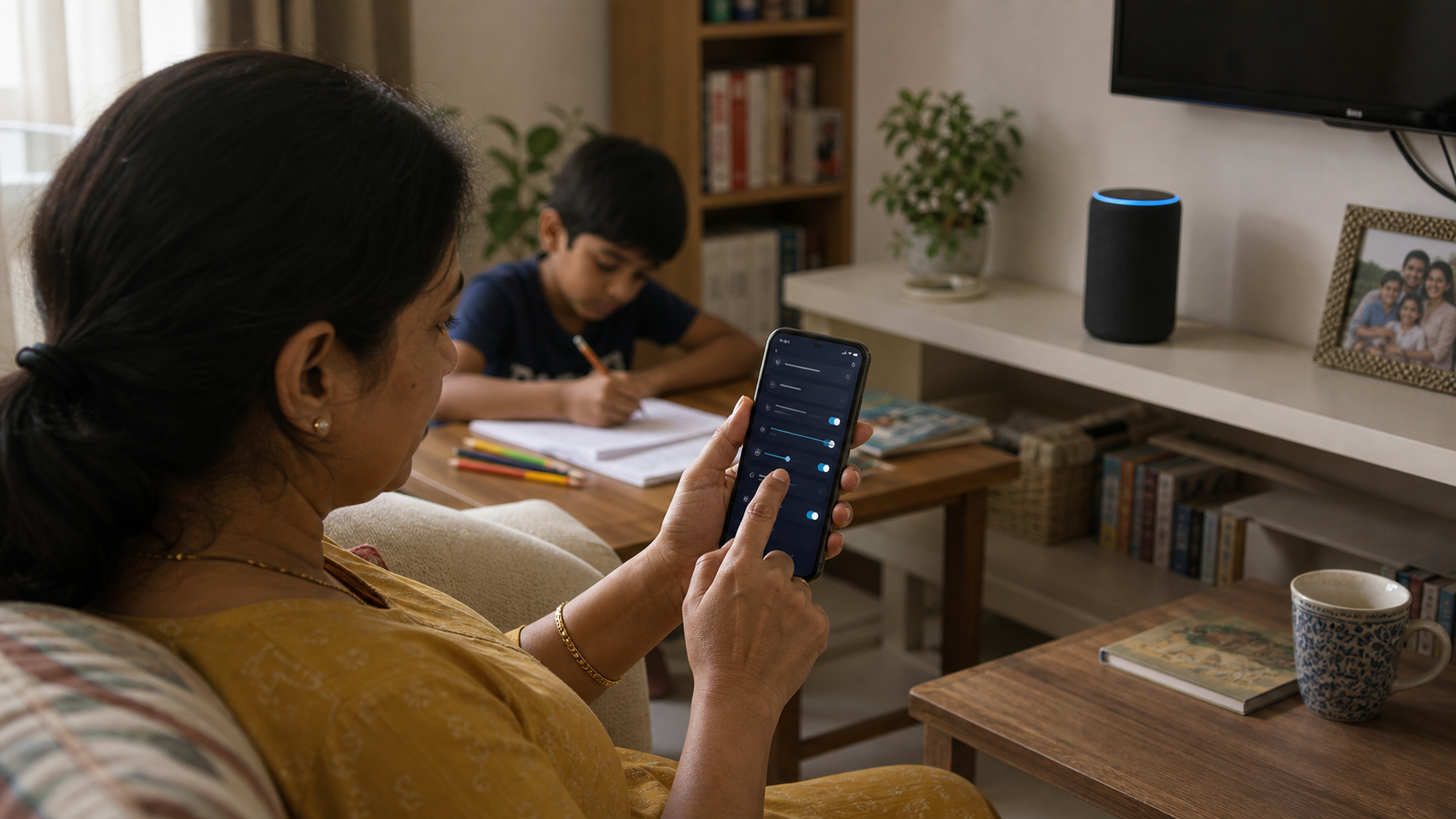
Any always-available assistant inside a home raises privacy questions. Users want convenience, but they also want control. Families need to know what is recorded, what is stored, what is used for improvement, and how children or shared devices are handled.
Amazon's public Alexa+ materials mention family use cases and a Kids experience, but the India beta reporting does not provide detailed local privacy terms. That means users and product observers should wait for the actual India rollout details before making assumptions.
For product builders, the lesson is broader: if an AI assistant listens, speaks, remembers, or acts across devices, privacy cannot be hidden in settings. It has to be visible through the design:
- clear microphone and recording controls
- simple history review and deletion
- child-safe defaults where relevant
- permission gates for purchases or sensitive actions
- transparent data-use explanations
- easy ways to correct or stop the assistant
The more personal the assistant becomes, the more important those controls become.
The hard part: code-mixed language
The most interesting technical challenge may be code-mixed speech. Many Indian users naturally mix Hindi and English, sometimes within the same sentence. A user might use Hindi grammar, English app names, local slang, and brand names in one command.
For a voice AI system, that creates challenges across the stack:
- speech recognition has to capture the words correctly
- language understanding has to infer intent
- the response has to sound natural
- the assistant has to handle names and local entities
- the system has to know when to ask a clarifying question
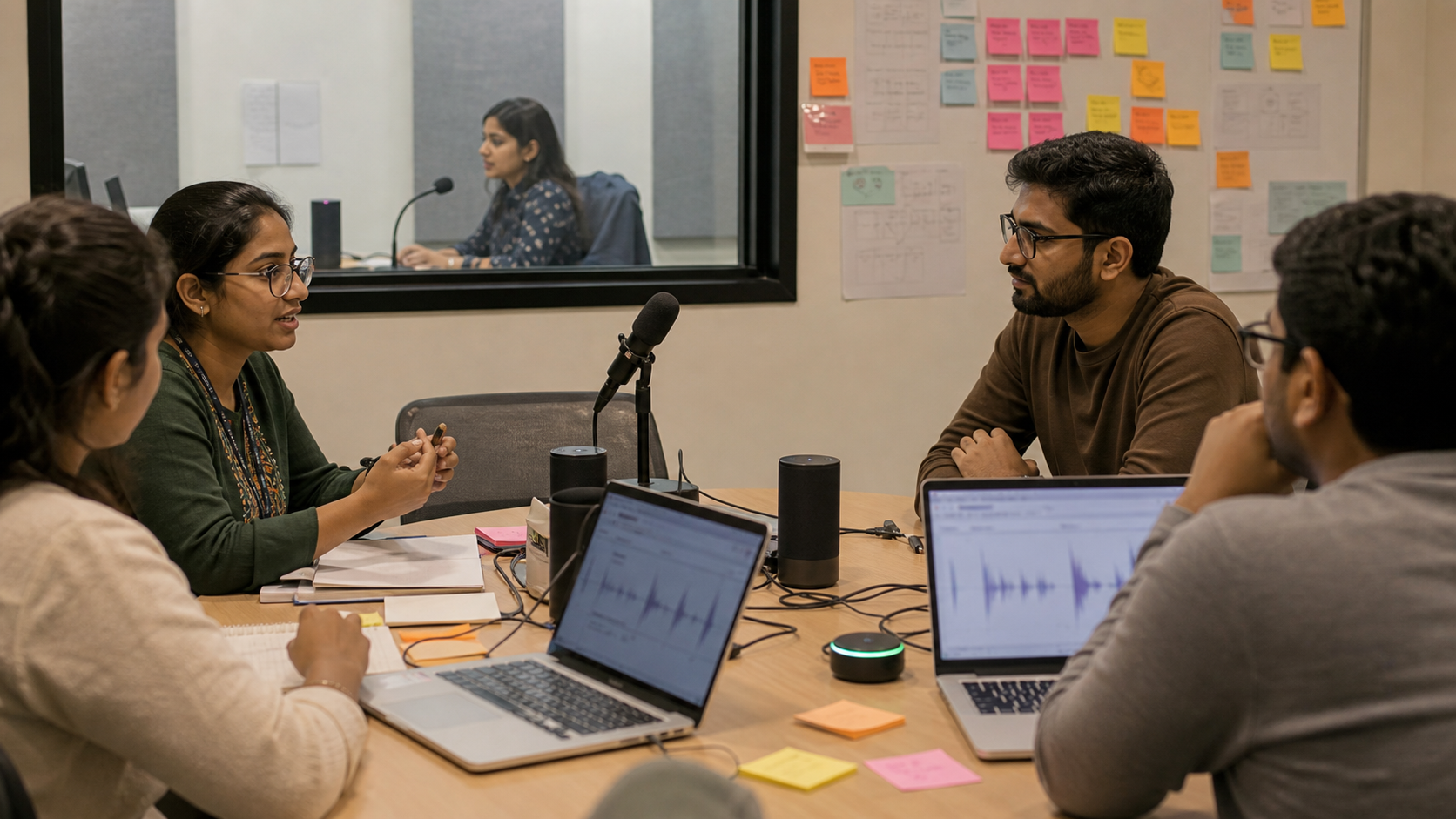
This is where beta testing with real users becomes valuable. Lab examples do not cover the full range of accents, background noise, home environments, and casual phrasing. Real-world feedback helps teams find the points where the assistant sounds impressive in demos but breaks in daily use.
What product teams should watch
The Alexa+ Hindi beta gives product teams a checklist for evaluating local-language AI launches.
First, watch availability. Amazon has confirmed testing, but not a broad India launch date. Until that changes, this is a beta signal rather than a finished market rollout.
Second, watch device support. Alexa+ value depends partly on where users can access it: smart speakers, phones, web, Fire TV, Echo displays, and other compatible devices.
Third, watch pricing. Amazon's international Alexa+ information shows country-specific pricing and Prime-related positioning in some markets, but India pricing has not been announced in the June 22 reporting. Pricing will matter because India is a price-sensitive market, especially for subscription AI.
Fourth, watch accuracy in local contexts. The assistant needs to handle Indian names, places, accents, festivals, commerce patterns, entertainment, and family workflows without feeling imported.
Fifth, watch integrations. A local assistant becomes much more useful when it works with services people actually use.
What users should expect from the first wave
The first wave of Alexa+ Hindi testing will probably be uneven. That is normal for a beta. The useful question is whether the product improves quickly through real feedback.
Users should expect the assistant to be stronger in general tasks than in highly specific local workflows at first. They should also be careful with sensitive questions, purchases, personal data, or advice that could affect health, money, or safety. A voice assistant can be convenient, but it should not become an unchecked decision-maker.
The best early use cases are likely everyday tasks: reminders, timers, simple planning, smart home controls, entertainment discovery, basic explanations, and conversational exploration. More serious workflows should require confirmation and visible controls.
India could shape the global assistant playbook
If Alexa+ works well in Hindi, it could influence how AI assistants expand into other multilingual markets. India is a demanding test because language, price, family use, mobile behavior, and local context all matter at once.
That makes the beta strategically important. A successful assistant in India cannot rely only on English AI patterns. It has to understand how people actually speak, share devices, make decisions, and trust technology inside homes and small businesses.
For Amazon, this is a chance to make Alexa+ feel relevant again in a market where smartphone AI, Google services, WhatsApp-based workflows, and regional-language content are already strong. For users, it could bring generative AI into more familiar daily interactions. For builders, it is a reminder that the next big AI products may win through language fit and distribution, not only model power.
Why this is different from earlier Alexa localization
Voice assistants have supported multiple languages before, including versions of Alexa for different markets. The Alexa+ Hindi beta is different because Alexa+ is positioned as a generative AI assistant rather than a command-and-response assistant.
That changes the product problem. A traditional assistant can map a phrase to an intent: play music, set alarm, turn on light, answer weather. A generative assistant has to sustain a conversation, understand follow-up questions, remember context, and produce more flexible answers. When that experience moves into Hindi, the language model has to do more than recognize a command. It has to participate in a dialogue.
This raises the bar for localization. A translated interface may be enough for simple menu software. It is not enough for conversational AI. The assistant has to understand how people speak when they are relaxed, impatient, distracted, or switching languages. It has to make fewer awkward assumptions. It has to know when a question is about a local topic and when it is a general question. It has to produce responses that sound natural, not machine-translated.
For product builders, this is the difference between language support and language-native design. The first is a feature checkbox. The second is a product strategy.
The role of devices in making AI practical
One reason Amazon remains important in the assistant race is hardware. A chatbot in a browser is useful, but it still requires the user to open a device, type, and read. A voice assistant sitting in a room changes the interaction pattern. It can be used while hands are busy, while a family is gathered, or while a small business owner is moving around a shop.
That device presence can be powerful if the assistant is genuinely helpful. It can also become frustrating if the assistant misunderstands, talks too much, or fails at local context. The device makes the assistant more available, but it also makes mistakes more visible.
For India, the device layer will matter in several ways. Some households may use Echo-style speakers. Others may rely more on phones. Some users may expect voice to connect with entertainment, shopping, reminders, or smart home devices. Others may care more about simple questions, translation, education, or local information.
Amazon's public Alexa+ materials emphasize continuity across devices and more capable conversations. The India beta will test whether that promise can translate into daily usefulness for users who may not think of AI as a separate app.
What local AI teams can learn
Indian AI startups and product teams do not need to copy Amazon's device strategy to learn from this beta. The deeper lesson is that local-language AI quality is a full-stack challenge.
A team building a Hindi-first or multilingual AI product has to think through:
- speech recognition accuracy in real environments
- language model behavior for mixed Hindi-English prompts
- culturally appropriate responses
- fallback behavior when the assistant is uncertain
- privacy controls that normal users understand
- cost structure for price-sensitive users
- support for older devices and inconsistent networks
- feedback loops that improve local performance over time
The best products will not simply wrap an English AI model and translate output. They will design for the user's context from the start.
That includes onboarding. A user should quickly understand what the assistant can do, where it may be wrong, how to correct it, and how to control privacy. It also includes failure design. When the assistant misses a word, cannot complete a request, or is unsure, the recovery experience should be calm and clear.
Where Alexa+ may face competition
Alexa+ will not arrive in a quiet market. Indian users already interact with Google services, Android voice features, WhatsApp, YouTube, regional-language media, payment apps, commerce platforms, and smartphone AI features. Many users may not see a separate voice assistant as necessary unless it solves a clear problem.
That means Alexa+ will need strong daily hooks. Music and timers helped the original smart speaker category, but generative AI has to justify itself with more flexible value. It might help with family planning, entertainment discovery, smart home control, recipes, education support, reminders, and conversational answers. The stronger the local integrations, the more useful it becomes.
Competition will also come from phones. If Android and iPhone assistants become more capable in Indian languages, users may prefer the device already in their hand. Smart speakers can win shared spaces; phones can win personal workflows. The best assistant experience may need both.
For Amazon, the India test is therefore not only about language. It is about proving that Alexa+ has a unique place in a world where every major platform is adding AI.
The SEO and content angle for businesses
There is a practical marketing implication too. As voice AI improves in Hindi and other Indian languages, users may ask more questions aloud instead of searching in the traditional way. That does not mean websites stop mattering. It means content quality, structured information, local relevance, and clear answers become even more important.
Businesses should prepare for a world where AI assistants summarize, recommend, and route users based on available information. A local service business, education brand, app developer, or e-commerce company should make sure its public information is accurate, accessible, and easy for systems to understand.
That includes clear service pages, FAQs, pricing explanations where appropriate, location details, product documentation, and content that answers real user questions. The same content that helps search users can help assistant-driven discovery, especially when it is specific and trustworthy.
For Diveno Labs readers building apps or digital products, this is another reason to treat content and product information as infrastructure. AI assistants need good inputs.
The Diveno Labs take
The Alexa+ Hindi beta is worth watching because it tests whether generative AI can become a household utility in India rather than another English-first tech feature.
The product challenge is not only "make Alexa smarter." It is "make Alexa useful, trustworthy, and natural in the way Indian families and workers actually speak." That includes Hindi, Hinglish, accents, local references, privacy expectations, pricing, and integrations.
For startups, the message is clear: local-language AI is not a side feature. It is a product strategy. The strongest AI apps in India will be built around real language behavior, not translated marketing copy.
Source notes
- TechCrunch: Amazon is testing Alexa+ in India with Hindi support
- The Next Web: Amazon invites Indian users to beta-test a Hindi version of Alexa+
- Amazon News: Introducing Alexa+, the next generation of Alexa
- Amazon: Discover Alexa+
- Amazon News: Alexa+ international launch information
Frequently asked questions
Is Alexa+ available in India now?
TechCrunch reported on June 22, 2026 that Amazon is inviting some Indian users to beta-test a Hindi-language Alexa+ experience, but Alexa+ is not yet broadly available in India and no public launch date was confirmed.
Why is Hindi support important for Alexa+?
Hindi is spoken by more than 600 million people in India, and many users move naturally between Hindi, English, and code-mixed speech, making local-language support central to everyday voice AI adoption.
What should product teams learn from the Alexa+ Hindi beta?
Voice AI products need local language quality, privacy trust, realistic daily use cases, device compatibility, and careful beta feedback before they can become mainstream utilities.
Build with Diveno Labs
Turn this idea into a working system.
Share the workflow, product, or content bottleneck you want to improve. We will help shape it into a practical build.
Build AI products for real users