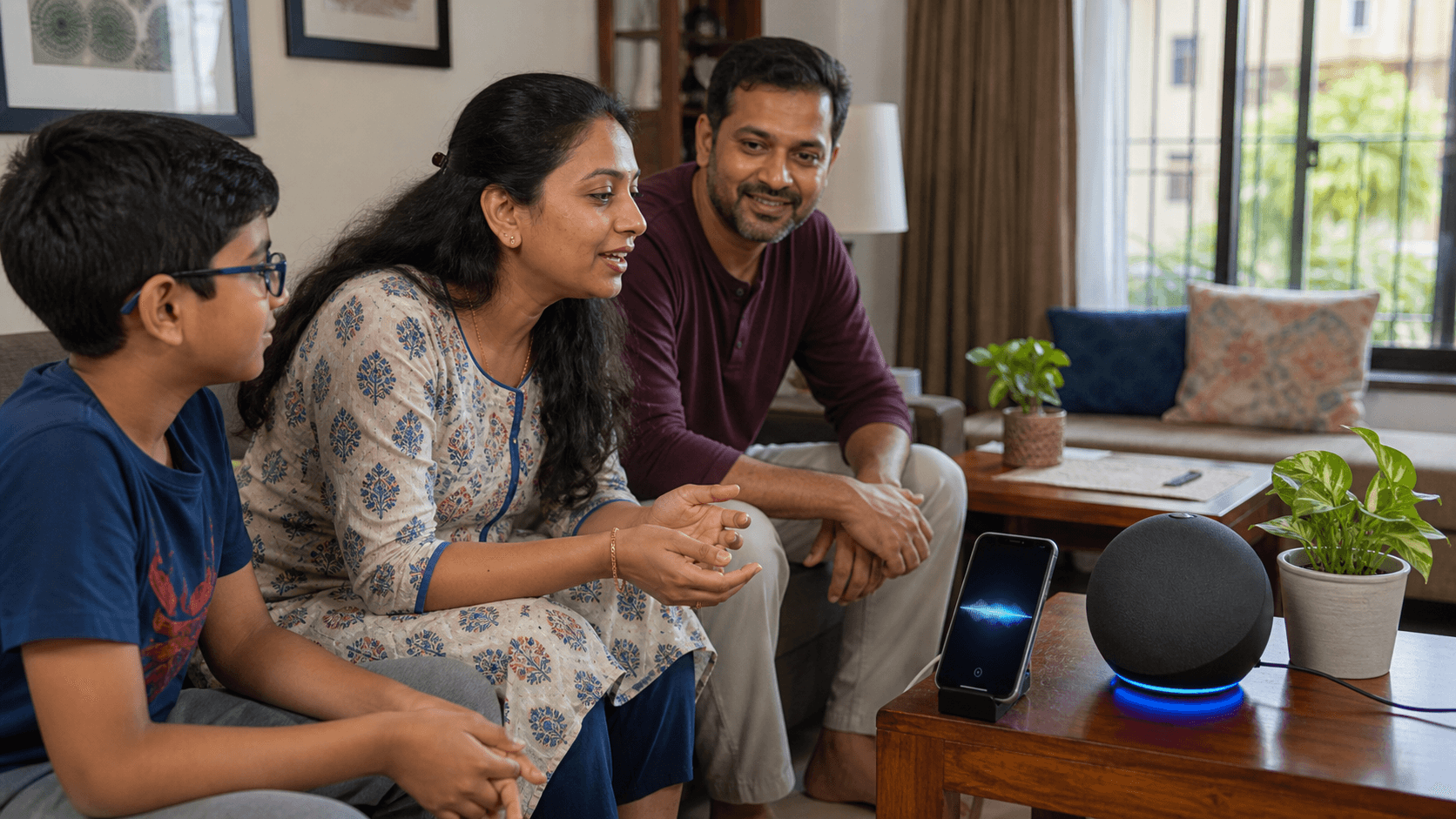
OpenAI's June 18, 2026 update on health intelligence in ChatGPT is one of those product announcements that looks simple at first and becomes more important the longer you sit with it.
The headline is direct: GPT-5.5 Instant now brings stronger health intelligence to more people. OpenAI says more than 230 million people use ChatGPT every week for health and wellness questions, including understanding health information, making sense of lab results, preparing for appointments, navigating insurance, building healthier habits, and figuring out what to ask next.
That is a mainstream product reality, not a small experimental use case. People already ask AI systems about symptoms, medication explanations, test results, diet, exercise, sleep, insurance language, and doctor recommendations. The real question is no longer whether people will use AI for health. They already do. The question is whether the product experience can become more accurate, more cautious, easier to understand, and better at encouraging real-world care when needed.
OpenAI says GPT-5.5 Instant improves in areas that matter for health: recognizing when urgent care may be needed, asking for relevant context, explaining uncertainty, and making complex information easier to understand. The company also says GPT-5.5 Instant now performs at a level comparable to its frontier Thinking models on an aggregate of health evaluations, including HealthBench Professional.
For Diveno Labs readers, the most useful takeaway is not "AI is becoming a doctor." That is the wrong frame. The better frame is this:
Consumer AI is becoming a first layer of health understanding.
That first layer can help people prepare, organize, and ask better questions. It can also become dangerous if users treat a confident answer as a diagnosis or delay care because an AI response sounded calm. This update matters because it shows both sides of the product challenge clearly.

GPT image generated for Diveno Labs: a clinician and patient reviewing health information together in an exam room.
What OpenAI actually announced
OpenAI published the update on June 18, 2026 under the title "Improving health intelligence in ChatGPT." The company says health is one of the most meaningful ways people use ChatGPT, with more than 230 million weekly users asking health and wellness questions.
The update centers on GPT-5.5 Instant, which OpenAI says is available to all free users in ChatGPT, subject to limits. According to OpenAI, the model has improved in several health-relevant behaviors:
- recognizing when urgent care may be needed
- asking for relevant context
- explaining uncertainty without overstating confidence
- making complex medical information easier to understand
- tailoring responses to local healthcare context more often
- missing fewer red flags or referrals to care
OpenAI says it measures health progress through health-specific evaluations, including HealthBench and HealthBench Professional. Those evaluations use realistic health conversations and physician-written rubrics to assess accuracy, safety, communication, context awareness, completeness, and appropriate escalation.
The company also says physicians compared GPT-5.5 Instant responses with physician-written responses and older model responses across 3,500 reviewed responses. In that evaluation, GPT-5.5 Instant responses were rated higher across criteria. OpenAI also says privacy-preserving monitors on production traffic show that the rate of responses with at least one flagged health factuality issue fell by 71% in the last two months, based on a comparison of recent production health traffic.
Those are meaningful claims, and they should be read carefully. They do not mean ChatGPT is a replacement for care. They do mean OpenAI is trying to move health answers from generic "internet summary" behavior toward a product system with evaluation, physician feedback, escalation habits, and quality monitoring.
Why this is a consumer-tech story, not only a healthcare story
Health AI often gets discussed as if it belongs only inside hospitals, clinics, and insurance systems. That misses what is happening on the consumer side.
Millions of people do not begin with a hospital workflow. They begin with a question at home:
- What does this lab result mean?
- Why did my doctor recommend this scan?
- What should I ask at my next appointment?
- Is this symptom urgent?
- How should I explain my sleep data?
- What does this insurance denial letter mean?
- How do I compare two treatment options before speaking to my clinician?
That is where ChatGPT sits. It is not just a clinical tool. It is also a consumer interface for confusion.
This is why the OpenAI update has product implications beyond medicine. The next wave of useful consumer AI will not be only about faster answers. It will be about helping people navigate messy personal decisions where the answer depends on context, risk, urgency, and trust.
Health is the sharpest version of that pattern. A travel question can be inconvenient if wrong. A shopping recommendation can waste money. A coding answer can break a build. A health answer can influence whether someone seeks care.
That changes the product bar.
The real product shift: from answer engine to preparation layer
The safest and most useful way to think about consumer health AI is as a preparation layer.
Preparation is different from diagnosis. A preparation layer helps users:
- summarize what they know
- identify missing context
- translate medical language into plain language
- prepare questions for a clinician
- understand why a doctor might recommend a test
- organize symptoms and timelines
- compare follow-up options
- notice red flags that should not wait
This is exactly where AI can be useful without pretending to be a clinician.
OpenAI's own examples lean in that direction. The update describes better responses for understanding a doctor's recommendation and preparing for an appointment. That distinction matters. A helpful AI answer should make the user more ready for the healthcare system, not more isolated from it.

GPT image generated for Diveno Labs: an appointment-preparation scene where notes and a tablet support a clinician conversation.
For product teams, this is a useful design lesson. High-trust AI should often be framed as "help me prepare" rather than "tell me what to do." Preparation keeps the user oriented toward the right human, institution, or decision process. It also reduces the temptation to turn uncertainty into false certainty.
Why HealthBench matters
OpenAI's health claims rely heavily on evaluation. That is where HealthBench becomes important.
OpenAI introduced HealthBench in 2025 as a benchmark for AI systems and human health. It was built with 262 physicians who had practiced in 60 countries. The benchmark includes 5,000 realistic health conversations, each with physician-created rubrics for grading model responses.
The useful part is that HealthBench is not just a medical trivia test. OpenAI says the conversations are multi-turn and multilingual, cover layperson and healthcare provider personas, span many specialties and contexts, and include themes like emergency referrals, uncertainty, health data tasks, global health, expertise-tailored communication, context seeking, and response depth.
That is the right direction because consumer health questions are rarely clean exam questions. Real people ask incomplete questions. They omit details. They mix symptoms, anxiety, anecdotes, cost concerns, family opinions, and time pressure. A useful system has to handle the conversation, not just know facts.
OpenAI says HealthBench includes 48,562 unique rubric criteria. That kind of granular rubric work matters because health quality is not one thing. A response can be factually correct but too confident. It can be complete but too technical. It can be reassuring in a way that misses urgency. It can mention emergency care but bury it too far down the answer.
For any company building AI into sensitive workflows, the lesson is clear: broad benchmarks are not enough. You need domain-specific evaluations that reflect the actual failure modes users will face.
The safety tension that still matters
OpenAI's update is positive, but it should not be read as "problem solved."
Independent medical-AI research continues to show why consumer health guidance needs caution. A Nature Medicine article published in 2026 tested ChatGPT Health in structured triage scenarios. The researchers used clinician-authored vignettes across the acuity spectrum and found safety concerns at clinical extremes. In the clear-case set, performance was strongest for intermediate presentations but declined for nonurgent and emergency conditions. Among true emergencies in that study, 51.6% were undertriaged to 24-48 hour evaluation.
That kind of finding does not cancel OpenAI's June 18 progress update. It gives the progress a sharper context. The product can improve substantially and still require careful boundaries.
In health, the most dangerous mistakes are not always the most obvious. A model may handle textbook emergencies well but struggle with cases where danger depends on progression, objective findings, or subtle clinical context. It may also be affected by how a user frames the situation, including whether family members have minimized symptoms.
That is why health AI needs more than accuracy. It needs conservative escalation, clear uncertainty, and a habit of saying when the answer should not remain inside the chat.

GPT image generated for Diveno Labs: a product review setting focused on health AI evaluation and safety checks.
What better health answers should feel like
For everyday users, the best health AI answers should not feel like a dramatic diagnosis. They should feel like a careful translator and organizer.
A strong answer usually does several things:
- starts with the most urgent safety issue if one exists
- asks for context when the question is underspecified
- avoids pretending certainty where evidence is limited
- explains medical language in plain words
- separates general education from personal medical advice
- helps the user prepare questions for a clinician
- encourages urgent care when red flags appear
- avoids shaming, fear, or dismissive tone
This is the kind of behavior OpenAI says GPT-5.5 Instant has improved on. The company says physician review helps identify where responses may miss context, sound too confident, need clearer next steps, or should more directly encourage someone to seek medical care.
That product behavior is more important than a single benchmark score. Users do not experience a score. They experience tone, sequencing, clarity, and what the product nudges them to do next.
Why free-user availability is a big deal
OpenAI says GPT-5.5 Instant is available to all free users in ChatGPT, subject to limits. In health, that matters.
If a stronger model is available only to high-paying users, the safety benefits are uneven. The people most likely to need accessible health explanation may not be the people paying for premium AI. Moving stronger health behavior into the free tier makes the product change more socially significant.
This is also a market signal. AI companies are no longer treating consumer health questions as edge behavior. They are moving health intelligence into the default experience because the demand is already there.
For startups and app builders, the takeaway is simple: users will expect better health-adjacent explanations across products. Fitness apps, sleep apps, food apps, insurance tools, pharmacy apps, care navigation tools, and workplace wellness platforms will all be compared against the clarity people get from general AI assistants.
Wearables make the next step more personal
The most interesting future direction is not just better answers to typed questions. It is health AI combined with personal context.
People already collect health signals from watches, phones, sleep trackers, glucose monitors, exercise apps, nutrition logs, and medical portals. Most of that data is difficult for normal users to interpret. Even when a dashboard is clean, it often stops at charts and alerts. It does not always help the user understand what to ask next.
AI can sit on top of that personal context and make it more usable. It can help someone notice patterns, prepare questions, summarize trends, and distinguish normal fluctuation from something worth discussing.

GPT image generated for Diveno Labs: a consumer health moment where wearable trends become part of the AI conversation.
But this is also where privacy becomes central. Health data is sensitive even when it is not technically a medical record. Sleep, fertility, medication, mood, activity, weight, blood sugar, heart rate, and location-adjacent wellness patterns can reveal intimate details about a person's life.
Any product that connects AI to health data needs clear consent, understandable controls, limited retention, and a user experience that does not hide the cost of personalization.
What product teams should learn from this update
The OpenAI health update is useful even if your company never builds a medical product. It shows what serious AI product design starts to look like in high-stakes areas.
First, the evaluation system has to match the product risk. If your AI helps with hiring, finance, education, legal operations, customer support, or safety-related workflows, a generic quality check is not enough. You need failure-mode-specific evaluation.
Second, the product should be designed around escalation. In health, escalation means seeing a clinician or seeking urgent care. In finance, it may mean speaking to a qualified adviser. In cybersecurity, it may mean opening an incident. In product support, it may mean moving from automation to a human agent.
Third, user trust depends on uncertainty handling. A model that is always smooth can be less trustworthy than a model that clearly says what it does not know.
Fourth, personalization raises the privacy bar. The more useful the assistant becomes, the more sensitive the context becomes.
Why "context seeking" may be the most important behavior
One detail in OpenAI's health evaluation language deserves extra attention: context seeking.
In a normal consumer app, asking follow-up questions can feel like friction. In a health conversation, it is often the difference between a generic answer and a responsible one. A user might ask whether a symptom is serious without mentioning age, pregnancy, medication, timing, fever, injury, chronic disease, recent surgery, immune status, or whether the symptom is getting worse. Those details can completely change the next step.
This is why a good health AI system should not rush to sound helpful. It should know when the missing information is important enough to ask for it before giving a strong recommendation.
For example, "I have chest pain" is not a content question. It is a safety question. The product should not begin with a long educational overview of possible causes. It should first check urgency and encourage emergency care when red flags are present. The same applies to sudden weakness, difficulty breathing, severe allergic symptoms, stroke-like symptoms, suicidal thoughts, severe abdominal pain, or symptoms in infants and vulnerable patients.
For less urgent questions, context seeking still matters. A user asking about a cholesterol number may need help understanding whether the result is high, but the real interpretation also depends on risk factors and the clinician's plan. A user asking about exercise after illness may need different guidance depending on whether they had fever, chest symptoms, dizziness, or a diagnosed condition.
This is the product behavior users should learn to value: an assistant that asks a careful question is not being less smart. It may be being more responsible.
The trust challenge: plain language without false simplicity
Health communication has a difficult balance. If the answer is too technical, users may leave more confused than before. If the answer is too simple, it may flatten real uncertainty.
OpenAI says GPT-5.5 Instant is better at making complex information easier to understand. That is useful, but the best health explanations should preserve the shape of the decision. They should explain what is known, what is uncertain, what depends on a clinician's exam, and what should happen next.
For example, a useful explanation of a lab result should not only say whether the number is inside or outside a reference range. It should explain that ranges differ by lab, that one value rarely tells the whole story, that trends may matter, and that symptoms and medical history can change interpretation.
The same applies to treatment choices. A user may ask which option is "best," but a good answer should explain that the answer may depend on goals, side effects, cost, availability, other conditions, and the clinician's judgment. The product should help the user ask better questions rather than pretend the conversation is complete.
This is where AI can be genuinely useful for ordinary people. Medical systems often move quickly. Appointment time is limited. Written instructions are not always clear. A plain-language assistant can help users slow the information down and return to the next appointment with more confidence.
The local-context problem
OpenAI says GPT-5.5 Instant more often tailors responses to local healthcare context. That is an important direction because health guidance is not the same everywhere.
The right next step can vary by country, insurance system, emergency number, clinic access, pharmacy rules, and whether a user can see a specialist directly. Even the language around care levels differs. Some places use urgent care clinics heavily. Others rely more on primary care, hospital outpatient departments, or emergency rooms.
For global consumer AI products, local context is not a nice extra. It is part of usefulness. A technically correct answer that assumes the wrong healthcare system can still be unhelpful.
This is also relevant for Indian users, who often move between private clinics, hospitals, pharmacies, diagnostic labs, family advice, and online consultations. A health AI product should avoid assuming that every user has the same access path, same insurance model, or same appointment timeline.
The most useful assistant is one that explains general information while helping the user adapt next steps to the care options actually available to them.
Why health AI will influence non-health apps
Health is a special category, but its product patterns will spread.
Any AI feature that touches serious decisions will borrow from health-AI design:
- education tools will need escalation when students are at risk or confused
- financial tools will need clearer boundaries around advice
- legal tools will need explainers that avoid pretending to be counsel
- workplace tools will need permission models for sensitive data
- cybersecurity tools will need incident escalation when risk is high
- customer-support AI will need handoff when automation is no longer appropriate
This is why the OpenAI health update is relevant to builders outside healthcare. It shows that a more capable model is only one part of the product. The product also needs evaluation, red-team thinking, role clarity, and a humane path back to people.
The companies that learn this early will build AI features that users can keep using after the novelty fades.
What everyday users should do differently
If you use ChatGPT for health questions, the practical advice is simple.
Use it to prepare, not to replace care.
Good uses include:
- asking for plain-language explanations of medical terms
- preparing a list of questions for your doctor
- organizing a symptom timeline before an appointment
- understanding why a test may have been recommended
- comparing general pros and cons of options already discussed with a clinician
- learning which red flags usually require urgent attention
Riskier uses include:
- deciding to avoid urgent care based only on a chat answer
- changing medication without a clinician
- treating an AI response as a diagnosis
- uploading sensitive records without understanding privacy controls
- relying on AI when symptoms are severe, worsening, sudden, or unusual
The point is not to avoid AI. The point is to use it in the right role.
Privacy is part of the product, not a settings page
Consumer health AI will only work if people trust the data boundary.
Privacy cannot be buried in a policy link. It has to appear in the product experience:
- what data is being used
- why it is being used
- whether it is saved
- whether it affects future answers
- whether it can be deleted
- whether it is used for model improvement
- whether third-party apps are connected
These questions become more important when AI moves from general information into personal health context.

GPT image generated for Diveno Labs: privacy and consent as a visible part of consumer health AI.
For Diveno Labs, this is the part product teams should take seriously. A great model wrapped in unclear privacy UX will not feel safe. A cautious model with transparent data controls has a much better chance of earning durable trust.
The Diveno Labs take
OpenAI's June 18 health-intelligence update is important because it brings a better version of health assistance to the default ChatGPT experience. It also shows how AI product work changes when the use case is personal, emotional, and potentially high consequence.
The useful future is not an AI doctor in everyone's pocket. The useful future is an assistant that helps people become clearer, better prepared, and more confident before they talk to the right professional.
That means the product bar is not just "smarter answers." It is:
- stronger evaluation
- better escalation behavior
- clearer uncertainty
- physician-informed quality checks
- privacy controls users can actually understand
- a product frame that keeps people connected to care
For builders, this is a preview of where AI products are going. The easy phase was making assistants answer more questions. The harder phase is making them behave responsibly when the question matters.
Source notes
Sources checked on June 19, 2026:
- OpenAI: Improving health intelligence in ChatGPT
- OpenAI: Introducing HealthBench
- Nature Medicine: ChatGPT Health performance in a structured test of triage recommendations
Image notes:
- All images in this post were generated with the GPT image generation model for Diveno Labs and saved under
/public/blog-images.
Frequently asked questions
What did OpenAI announce about ChatGPT health intelligence?
On June 18, 2026, OpenAI said GPT-5.5 Instant has substantially improved on health-specific evaluations and is available to all free ChatGPT users, subject to limits.
Can ChatGPT replace a doctor?
No. The practical value is in helping people understand information, prepare questions, and know when to seek care, while medical decisions still require qualified clinicians.
Why does this update matter for product teams?
It shows that consumer AI products are moving into high-trust, high-consequence workflows where evaluation, escalation, privacy, and careful product boundaries matter as much as model capability.
Build with Diveno Labs
Turn this idea into a working system.
Share the workflow, product, or content bottleneck you want to improve. We will help shape it into a practical build.
Build a safer AI product workflow